

Compound Microscope Price in India: What Drives the Cost in 2026?
Microscopes are commonly used in schools, laboratories, and research centres to study very small objects such as cells, bacteria, and tissues. A compound microscope is especially popular because it offers high magnification and clear image quality, making it useful for both learning and research.
The compound microscope price in India can vary depending on factors like lens quality, magnification power, features, and brand reputation. Microscopes with advanced technology and better optical systems usually come at a higher cost.
Before buying, many people compare different models to understand the microscope price range available in the market. Some buyers also check the Magnus microscope price, as Magnus microscopes are widely trusted by many laboratories and educational institutions for their quality and reliability.
Let's discuss the major factors influencing the compound microscope price in India in 2026.
What Is a Compound Microscope?
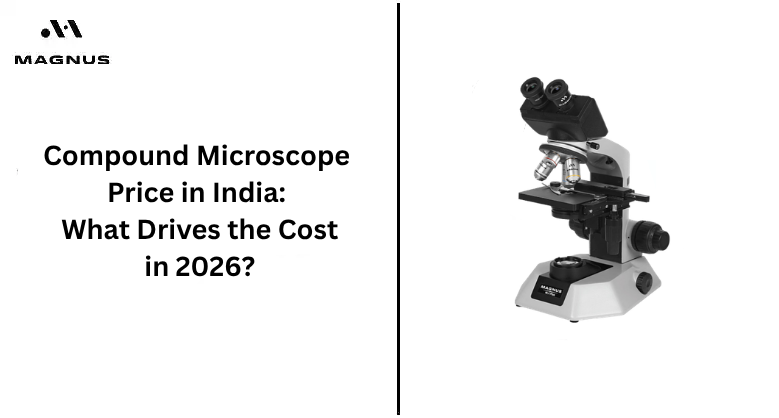
A compound microscope is a scientific instrument used by researchers to view very tiny objects clearly. It contains two or more sets of lenses, which significantly help in the magnification of unseen objects. Combining the objective and eyepiece lenses gives a bigger image.
These kinds of microscopes can enlarge objects to a minimum of around 40 times and a maximum of even 1000 times. This is the main reason why microscopes have become a vital instrument for cell studies, bacterial studies, and other microscopic studies. Besides health clinics and biology laboratories, research centres are places where you find compound microscopes.
Average Compound Microscope Price in India
The price of a compound microscope in India depends on its type and features. Microscopes for school use are low-cost and used by students for research on simple particles. Microscopes for research are expensive, and researchers use them for in-depth work. Basic models usually start at around ₹5,000 to ₹15,000 and are commonly used in schools.
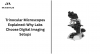
The price of binocular microscopes ranges from $15,000 to $40,000. They are suitable for tourists and travelling researchers. Trinoculars have three eyepieces for viewing and are priced between $40,000 and $200,000, with a modern design. This large range of prices for microscopes makes it obvious that the price is determined by the quality and features.
Lens Quality and Optical System
The quality of the lenses plays a role in determining the price of a microscope. Top-notch lenses can provide us with clear and crisp images, a necessity for viewing very small objects. Many microscopes have advanced features, such as special lenses, for instance, achromatic or plan achromatic.
These lenses greatly reduce image distortion and enhance image clarity. High-quality lenses can be produced only with highly advanced technology, and the compound microscope price increases. Effective lenses are particularly important in laboratories and research settings.
Magnification Power
The magnification level is a factor in the price of microscopes. The compound microscopes have magnification levels starting from 40x (40 times), 100x (100 times), 400x (400 times), and 1000x (1000 times) for image clarity. A higher microscope price often reflects better optical quality and clearer image magnification.
It indicates the microscope's cost. This is because such microscopes require high-quality lenses and precise optical design. Most of the time, a student microscope offers only simple magnification, whereas a research microscope provides much higher magnification and thus reveals details not visible under a student microscope.
Lighting System and Illumination
Compound microscopes need light to clearly see the sample. Many modern microscopes now use LED lighting systems. LED lights are brighter, use less electricity, and last longer than older bulb types for microscopes. Many modern microscopes include LED lights as part of these benefits. Advanced lighting systems can increase the price of compound microscopes by improving viewing quality.
Build Quality and Mechanical Design
The design and build quality of the microscope also affect its cost. Strong microscopes made with good materials usually last longer. Many microscopes include features such as coarse and fine focusing knobs and mechanical stages that help move the slide smoothly. These features make the microscope easier to use and more durable, but they can also increase the microscope's price.
Digital Features and Camera Support
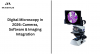
Microscopes have undergone a major technological upgrade. A few of the new ones even have a digital camera inside or a port to connect a camera. With these digital capabilities, you can not only take a photo of the specimen but also record video and share the live image on the computer. This is great both for teaching and research. In many laboratories, buyers compare models and check the Magnus microscope price to find reliable microscopes with advanced digital features.
Naturally, due to their digital capabilities, the prices of these digital option microscopes have gone up. In many labs nowadays, people even meticulously compare different models and check the price of microscopes to find those with good digital features and that are also quite reliable.
Brand and Manufacturer
The microscope brand is another factor that determines the price. Renowned companies usually manufacture microscopes of superior quality with advanced technology and strict quality control. Most laboratories tend to stick to the well-known brands as they ensure dependable performance and extended product life. Such brands might cost more, but in most cases, they provide better service and a longer warranty.
Purpose and Usage
The purpose also affects the microscope price and overall quality. Microscopes made for students are usually simple and affordable. They are designed mainly for learning and basic science. Microscopes used in medical laboratories and research centres require better lenses, advanced lighting and precise design. So the final price depends on how the microscope will be used.
To Wrap Up
The price of a compound microscope in India can vary widely. It depends on equipment factors such as lens quality, magnification power, lighting source, frame type, and included digital features. Simple student microscopes are low-cost for their school labs.
Advanced microscopes designed for research and laboratories are rather expensive. Apart from price, buyers do well to consider other aspects of a microscope, such as its features, quality, and durability. Many buyers compare different brands and evaluate the compound microscope price before making a decision. This helps them strike a balance between quality and cost.
For dependable performance, many laboratories and educational institutions trust microscopes from Magnus Opto. Their microscopes are known for clear optics, reliable build quality, and suitability for both teaching and research applications. Explore Magnus Opto microscopes to find the right solution for your laboratory needs.