

Brightfield vs Phase Contrast Microscopy: Which Is Best for Your Lab? - Magnus Opto
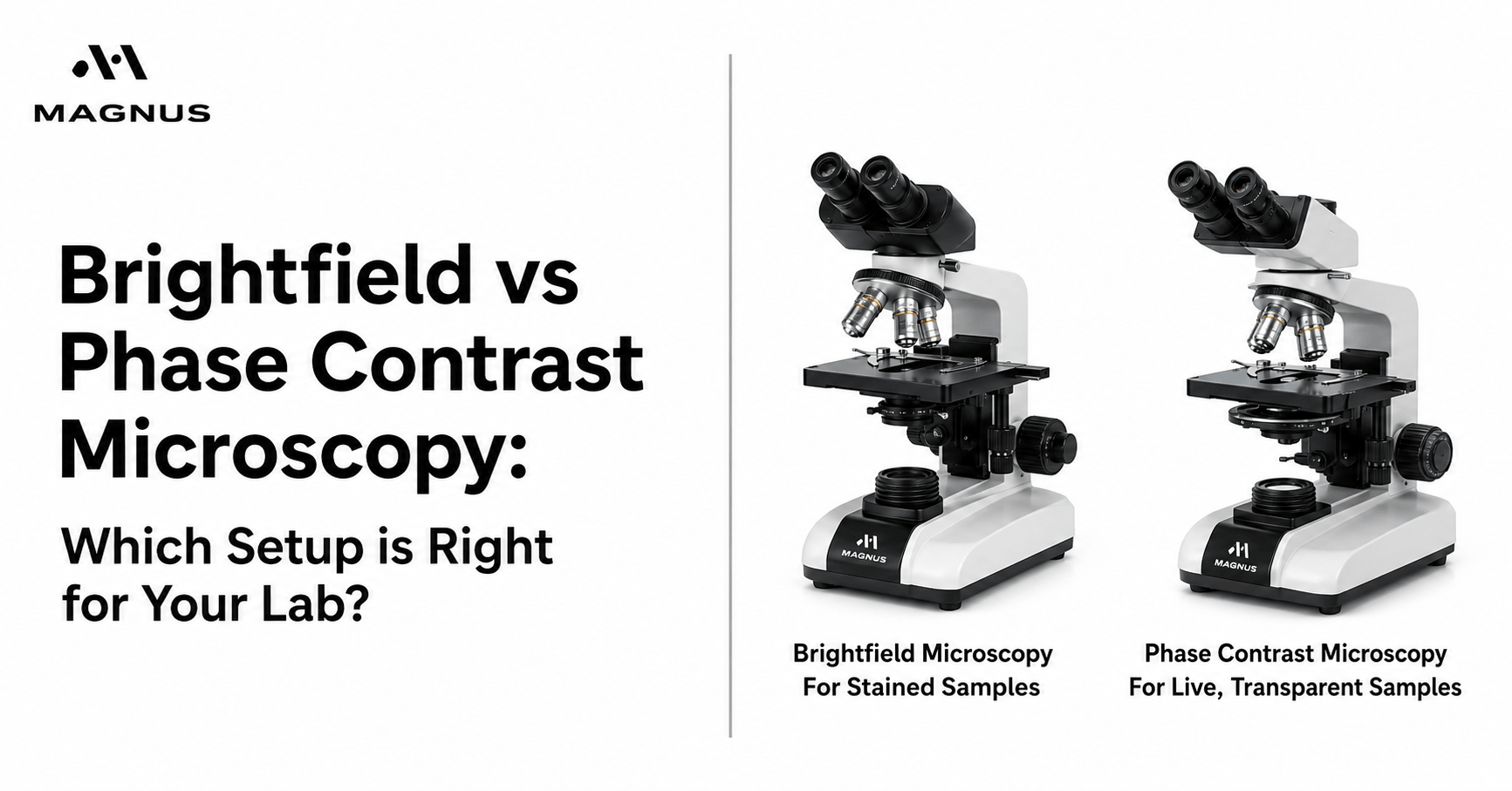
Microscopes aid in examining small samples under laboratory conditions in clinics, schools, and other scientific establishments. The microscope system varies depending on the intended use. Brightfield vs phase-contrast microscope types constitute a relevant theme. They differ significantly in terms of how they function. A brightfield microscope uses ordinary light to illuminate microscopic samples.
A phase-contrast microscope enables clear visualisation of tiny living organisms without the need for stains. Microscopy methods contribute immensely to scientific procedures on a daily basis. Selecting an appropriate technique enhances research efficiency, effectiveness and productivity. This blog explains the right microscope for brightfield and phase contrast microscopy.
Brightfield Microscopy
The brightfield microscopy technique is among the most widely used methods in laboratories. The method uses the light passing through the specimen to produce images. Dark objects show conducting examinations of stained slides or prepared specimens. Most medical and school laboratories rely on this technique daily. The brightfield technique is preferred for its affordability and simplicity, and for comparisons between brightfield and phase-contrast.
Phase Contrast Microscope
A phase contrast microscope is designed to view transparent and living samples clearly without using stains. It changes light waves into visible contrast and helps users see tiny details inside cells. The microscope setup is widely used in biology and medical research labs.
Scientists can study live cells without damaging them during observation. Phase-contrast systems are useful for viewing microorganisms, tissue cultures, and cell movement using modern microscopy techniques. This method supports clear imaging while keeping samples in their natural living conditions throughout the research work.
Difference between Brightfield Microscopy and Phase Contrast Microscope
| Feature | Brightfield Microscopy | Phase Contrast Microscopy |
|---|---|---|
| Light Background Bright | Bright | Grey or darker |
| Sample Type | Stained samples | Transparent live samples |
| Preparation | Requires staining often | Usually, no staining is needed |
| Cost | Lower | Higher |
| Image Detail | Basic structure | Internal cell details |
| Common Use | Education and routine labs | Cell research and biology |
Comparing brightfield and phase-contrast microscopy helps laboratories choose the appropriate microscope for their research and imaging needs.
Benefits of Brightfield Microscopy
- Brightfield microscopes offer many advantages for simple laboratory work.
- Easy to operate for beginners and students
- Lower equipment and maintenance cost
- Suitable for stained biological samples
- Produces clear images with good lighting
- Commonly available in schools and clinics
- Works well for routine laboratory testing
These microscopy techniques are useful for daily scientific observation. Many laboratories choose brightfield systems for providing reliable performance for basic sample analysis without complicated settings or advanced preparation methods.
Advantages of Using Phase Contrast Microscopy
A phase contrast microscope offers excellent support for advanced biological studies. It allows users to study living cells without adding stains or dyes. It helps preserve the natural structure of samples during observation. Researchers can observe cell growth, movement, and internal parts more clearly.
Phase-contrast microscopes are favoured for working with live specimens and for discussing brightfield vs phase contrast topics. The microscopy methods aid visual inspection and allow scientists to perform in-depth analysis in their laboratory work without harming fragile samples.
Common Applications in Laboratories
Different laboratories use these microscope systems for different scientific purposes.
Brightfield Microscopy Applications
- Blood sample testing
- Bacteria observation
- Classroom laboratory training
- Tissue slide examination
Phase Contrast Microscopy Applications
- Live cell analysis
- Microorganism research
- Cell culture monitoring
- Biological experiments
The choice between brightfield and phase-contrast microscopy depends on the type of sample. The research activities are performed in the laboratory each day.
Image Quality and Visibility Comparison
Image quality plays an important role in microscope selection. Brightfield microscopes create sharp images for stained samples with strong colour contrast. The transparent samples may appear difficult to see clearly.
A phase contrast microscope improves visibility by increasing contrast in transparent objects. Internal cell structures become easier to study without staining. These microscopy techniques support different imaging needs in laboratories. Phase-contrast systems usually provide better detail for living specimens, while brightfield systems work well for fixed and prepared slides.
Cost and Maintenance Factors
Laboratories often consider the budget before selecting microscope equipment. Brightfield microscopes are generally less expensive and easier to maintain. Replacement parts and accessories are commonly available.
A phase-contrast microscope usually costs more because it uses specialised optical components and advanced lighting systems. Maintenance may also require trained support. The smaller laboratories may prefer brightfield systems for routine work. Large research centres often invest in phase-contrast systems for advanced cell studies and detailed scientific observation.
Choosing the Right Microscope for Your Lab
Choosing the correct microscope depends on laboratory goals and sample type.
- Select brightfield systems for routine testing and stained slides
- Choose phase contrast systems for live cell observation
- Consider budget, maintenance, and training needs
- Check image quality requirements before purchase
- Review future laboratory research plans carefully
Modern microscopy techniques support many scientific fields today. Understanding brightfield and phase contrast helps laboratories invest in equipment that improves accuracy, efficiency, and daily research performance without unnecessary operational challenges or imaging limitations.
Future Importance of Modern Microscopy Techniques
Microscope technology continues to improve in the medical, education, and research industries. Modern technologies have enabled faster analyses and clearer images. Microscope innovations contribute to breakthroughs in medicine, biotechnology, and environmental sciences. Phase-contrast microscopes are still useful for live-cell observations and biological research.
Bright-field microscopy remains applicable in academic institutions and diagnostic laboratories around the globe. The growing need for accurate laboratory observation keeps discussions of brightfield vs phase-contrast microscopy important for many professionals. Future microscope systems may offer smarter imaging tools and improved digital research support.
Choosing the Right Microscope
Proper selection of a microscope is very important for better-quality studies and observations by researchers in labs. Brightfield microscopes are useful for basic tests and for stained specimens, whereas a phase-contrast microscope enables imaging of live cells for further biological investigations.
Knowledge of both brightfield and phase-contrast microscopy will help people select the appropriate equipment for their lab requirements. It provides better imaging solutions and improved scientific performance every year.
Wrapping Up
Brightfield microscopes are ideal for everyday tests and analysis of stained specimens. The phase-contrast microscope helps view live, transparent samples. Studying both brightfield vs phase-contrast microscopes will help laboratories use them properly.
Magnus Opto supplies top-notch microscope solutions for laboratories, schools, and research institutes. We offer advanced systems designed for clear imaging and smooth scientific observation. Explore with us today and contact us for advanced microscope setups that support accurate laboratory work and better research results.
FAQs
1. What is the main difference between brightfield and phase contrast microscopy?
The main difference between brightfield and phase contrast microscopy is the type of sample they are best used for. Brightfield microscopy works well for stained or prepared slides, while a phase contrast microscope is used to view transparent and living samples without staining.
2. When should a lab choose brightfield microscopy?
A lab should choose brightfield microscopy for routine testing, stained biological samples, classroom training, tissue slide examination, and basic laboratory observation. It is simple to use, affordable, easy to maintain, and suitable for schools, clinics, and standard diagnostic labs.
3. What is a phase contrast microscope used for?
A phase contrast microscope is used to observe live cells, microorganisms, tissue cultures, and transparent specimens without using stains or dyes. It helps researchers study cell movement, growth, and internal structures while keeping the sample in its natural condition.
4. Which microscope gives better image visibility for live cells?
A phase contrast microscope gives better image visibility for live cells because it increases contrast in transparent samples. It allows users to see internal cell details more clearly without staining, making it useful for biology, medical research, and cell culture studies.
5. Is brightfield microscopy more affordable than phase contrast microscopy?
Yes, brightfield microscopy is generally more affordable than phase contrast microscopy. Brightfield microscopes have simpler optical systems, lower maintenance needs, and easily available accessories, while phase contrast microscopes require specialised optical components and more advanced setup.
6. How do I choose between brightfield and phase contrast microscopy for my lab?
Choose brightfield microscopy if your lab mainly studies stained slides, fixed samples, or routine specimens. Choose a phase contrast microscope if your lab works with live cells, transparent samples, microorganisms, or advanced biological research that requires better internal detail visibility.
Reference
https://www.leica-microsystems.com/science-lab/microscopy-basics/phase-contrast-and-microscopy/
https://www.bajajfinserv.in/brightfield-microscope
https://www.scientifica.uk.com/learning-zone/a-guide-to-phase-contrast
https://www.bostonind.com/blog/principles-benefits-applications-phase-contrast-microscopy